
YouTube vs TikTok in 2026: Where Should Brands Put Their Video Effort?
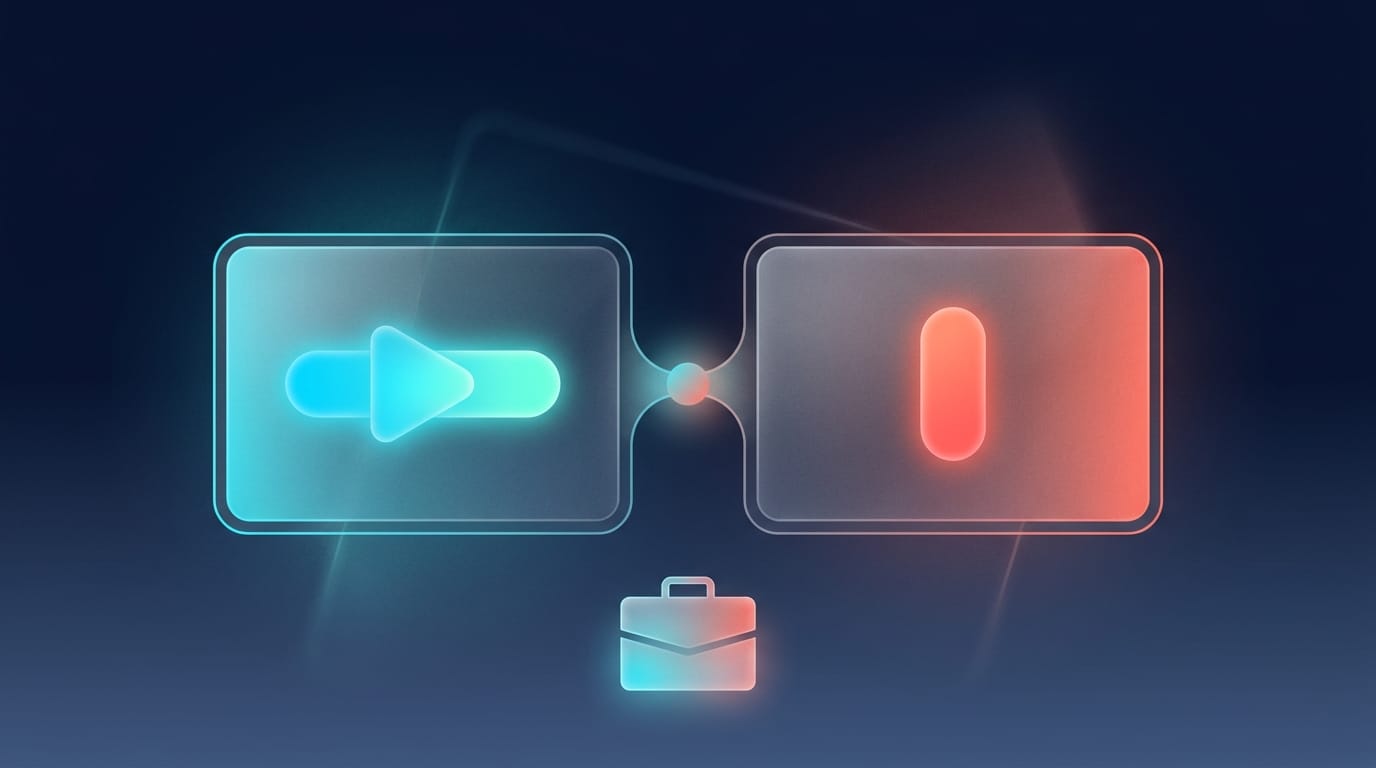
Sometime in the past year, the question inside social media teams changed: not whether short-form video belongs in the mix, but whether TikTok still deserves the lead role and YouTube should get the budget instead.
Marketers feel the shift in reach first:
"I have heard that TikTok is on the decline for views and I have seen this I have seen many of my favorite creators leave TikTok even last year and they are claiming that they get more views on other platforms" — marketer on r/socialmedia
When brands look for where video effort should go next, YouTube is usually the first candidate: a platform with search built in, content that keeps working for years, and an audience that treats video as a place to learn, not just to scroll.
This article compares YouTube and TikTok honestly for brands and agencies in 2026: what each platform gives you, where each one wins, and how to start on YouTube without hitting the wall that kills most new channels.
The honest state of play
TikTok remains the strongest cold-reach machine in social video. Nothing else puts a new account's content in front of so many strangers so quickly, with so little polish. For impulse-driven consumer products, trend-native categories, and top-of-funnel awareness, TikTok in 2026 is still a serious bet, and this article will not pretend otherwise.
What changed is predictability. Marketers describe organic reach on TikTok as increasingly volatile, and creators who built audiences there are openly testing other platforms. For a brand that depends on organic distribution, volatility is a cost: last year's reliable channel is this year's lottery.
YouTube's proposition is nearly the opposite. Viewers arrive with intent: they search for answers, comparisons, tutorials, and reviews. They also stay long and go deep:
"I love Instagram and YouTube, so many educational rabbit holes to fall down into" — marketer on r/socialmedia
That behavior is the whole case for YouTube. People do not just scroll there; they study. A good video can keep attracting viewers for months or years, while a short-form clip peaks within days.
What each platform actually gives a brand
| Dimension | TikTok | YouTube |
|---|---|---|
| Discovery model | Feed pushes content to strangers fast, regardless of follower count | Search, browse, and suggested; viewers often arrive with a question in mind |
| Content shelf life | Days, occasionally weeks | Months to years; evergreen videos compound |
| Viewer intent | Entertainment-first, low commitment | Intent-driven: learning, comparing, deciding |
| Production bar | Low; phone-native roughness works | Flexible, from Shorts to fully produced long-form |
| Best role in the funnel | Top-of-funnel reach and trend velocity | Mid- and bottom-funnel trust, plus evergreen demand capture |
| Audience signal depth | Thin comment context, fast-moving | Rich comment sections where viewers ask questions, object, and request follow-ups |
| Organic reach pattern | Fast but volatile | Slow start, then compounding |
AI audit of any YouTube channel
Drop a competitor's URL. In 5–15 minutes, get the full breakdown of what's working, what's broken, and exactly what to film next.
- 🎯Their content ideasVideos their audience keeps asking for that they never made
- ⚠️Their weak spotsExact topics and formats where viewers tune out or push back
- 💬Audience questionsStraight from their comment section — your next 10 scripts
- 📋A ready content planRanked backlog of what to film next, pulled from real demand signal
- 🔥Their superfansWho's emotionally invested in the channel and what gets them to talk
Just a URL and an email. Report lands in your inbox.
Read as assets, not rivals: TikTok rents attention quickly, while YouTube builds a library that keeps paying. The right answer depends on what you sell and how your buyers buy.
The wall: twenty videos in, nobody watching
Here is what brand marketers rarely say out loud: starting a YouTube channel from zero is humbling, and budget does not exempt you. The top post in one r/socialmedia thread about promoting a new channel put it plainly:
"When you started your YouTube channel from 0, how did you promote it? I'm creating my 20th video. Doing it for love but still feel discouraged if I don't have enough views. What did you do when you began?" — marketer on r/socialmedia
Brands and agencies hit the same wall. They bring good cameras, good editors, sometimes a full retainer, and view counts still sit low. The usual diagnosis is production quality; the real failure is usually one step earlier: topic selection. Twenty videos nobody searched for will not be rescued by better lighting.
That reframes the question every marketing team asks: how do you promote a new YouTube channel? The answer is not distribution hacks. It is making videos about things your niche is already asking about. Promotion, in other words, starts before recording.
Where TikTok genuinely wins
Being fair matters, because the wrong conclusion from TikTok's reach volatility is that the platform stopped working. It did not. TikTok still wins when:
- You need reach to strangers fast, without an existing audience.
- Your product is visual, impulse-driven, or trend-adjacent.
- Your team can sustain a high volume of quick, native-feeling formats.
- The goal is awareness and creative testing rather than search demand.
For many consumer brands, TikTok remains the most efficient place to earn attention with content. The question for 2026 is not whether to use it, but whether it should carry the whole strategy.
Where YouTube genuinely wins for brands
YouTube's strengths line up with what brands, especially B2B and considered-purchase businesses, actually need:
- Search intent. Buyers research before they buy: reviews, comparisons, "how to choose" videos. YouTube is where that research happens on video.
- Compounding shelf life. A video that answers a real question keeps drawing viewers for years. Short-form clips expire; YouTube libraries accumulate.
- Trust through depth. Long-form demos, walkthroughs, and honest comparisons do the convincing work that a 30-second clip cannot.
- A built-in research panel. Comment sections under your videos and competitors' are a continuous stream of questions, objections, and requests, if you read them systematically.
For small businesses with real expertise, this is also the honest answer behind YouTube for small business marketing: a niche service firm can own the search queries that bigger competitors ignore, one useful video at a time.
A decision framework for 2026
Pick TikTok first if your product is impulse-driven, your team is trend-native, and the goal is fast top-of-funnel reach with cheap creative testing.
Pick YouTube first if you sell a considered purchase or a B2B product, your team has expertise worth teaching, and the goal is durable inbound demand that compounds.
Run both as one system if you can hold a cadence on two platforms: short-form on TikTok and Shorts as the discovery layer, long-form on YouTube as the library where intent-driven viewers land. One production day can feed both if you plan for it.
Whichever you pick, the risk is identical: producing content before you know what the audience actually wants. That is where most brand channels quietly die.
Research before filming: how to start on YouTube without guessing
Teams that grow new brand channels deliberately tend to follow the same sequence.
1. Map the niche's questions before you film. What is your audience literally asking? Compile the questions in viewers' own words, not your internal vocabulary.
2. Read competitor comment sections. What do viewers praise on competing channels, what do they criticize, and what do they keep requesting? That is where content gaps show up: questions competitors never answered and complaints their audiences repeat.
3. Turn top questions into your first video slate. Ten to fifteen videos, each answering one real, recurring question. Titles that match actual queries give search a reason to surface them, and the answers give viewers a reason to stay.
4. Track sentiment and superfans once you publish. Which videos trigger questions, which trigger praise, which viewers keep coming back.
OneTube is built for exactly this research layer. It analyzes YouTube comments across five intents (question, praise, criticism, suggestion, discussion) and six emotions (grateful, eager, curious, disappointed, skeptical, neutral), and turns thousands of comments into a readable map of what a niche wants. Spy Mode extends the same lens to any public YouTube channel: top questions in viewers' own words, content ideas drawn from the audience, trends, topic clusters, and the superfans who anchor each community. Before you spend a production budget, you can see what a niche audience keeps asking competing channels for. Our YouTube competitor analysis guide walks through that research process step by step.
For agencies, the same workflow scales across client channels: the Agency plan adds multi-channel monitoring and white-label reports, turning niche research into a deliverable clients recognize. The full operating model is in our YouTube agency guide.
Honesty beat: what OneTube does not do
The limits, stated plainly. OneTube does not guarantee growth, and it does not manage ad budgets. It does not influence the algorithm, deliver views, make thumbnails, edit videos, or handle monetization, copyright checks, demographics, toxicity detection, or comment replies. Its job is narrower and more specific: it shows what your niche's audience is asking for in comments, and what is working on competing channels. The platform decision, the content strategy, and the videos themselves stay with you.
Pricing and how to test it
OneTube's plans: Creator at $19/mo, Pro at $49/mo, Studio at $119/mo, and Agency from $249/mo for multi-channel work with white-label reports. If you are weighing a YouTube push for your brand in 2026, the cheapest first step is a week of niche research: OneTube has a 7-day free trial, no card required.
FAQ
Should brands start a YouTube channel in 2026 if they already have TikTok?
Yes, when the category benefits from search-driven, long-shelf-life content: considered purchases, B2B products, anything education-heavy. Keep TikTok for reach, and treat YouTube as the library where intent-driven viewers land. Start with research into what your niche is asking, not with production.
Which is better for small business marketing: YouTube or TikTok?
It depends on how your customers buy. Impulse, visual, trend-driven categories usually get faster returns on TikTok. Expertise-led services and niche products usually do better on YouTube, where one useful video can attract customers for years. Small teams should pick one platform and hold a sustainable cadence on it before attempting both.
How do you promote a new YouTube channel from zero?
Promotion starts before recording. Find the questions your niche is literally asking, in competitor comment sections and in your own customer conversations, then make your first videos as direct answers to them. Titles that match real queries give search a reason to surface you. Then hold a cadence and expect a slow build.
Can you repurpose TikTok videos into YouTube Shorts?
Yes, and it is the cheapest bridge between the two platforms. Short-form clips that already proved themselves are good candidates, and Shorts can route curious viewers to your long-form library. Plan the repurposing during the shoot, not after.
What should agencies track across both platforms for clients?
Beyond reach and views, track audience signals: recurring questions, criticism, suggestions, and the superfans who show up on every upload. On YouTube those signals live in comments, and they are the raw material of strategy: what to make next and what competitors' audiences are asking for. Agencies that systematize this across client channels, with multi-channel monitoring and white-label reporting like OneTube's Agency plan, sell decisions rather than dashboards.